What matters most in this guide
- WhatsApp broadcast performance depends on segmentation, timing, and reply handling more than raw send volume.
- Template readiness and suppression logic are critical to customer trust and campaign quality.
- The best broadcast software closes the loop between outbound sends and inbound sales or support actions.
- Campaign analytics should be tied to downstream business outcomes, not only message activity.
Why WhatsApp broadcasts require more discipline than email blasts
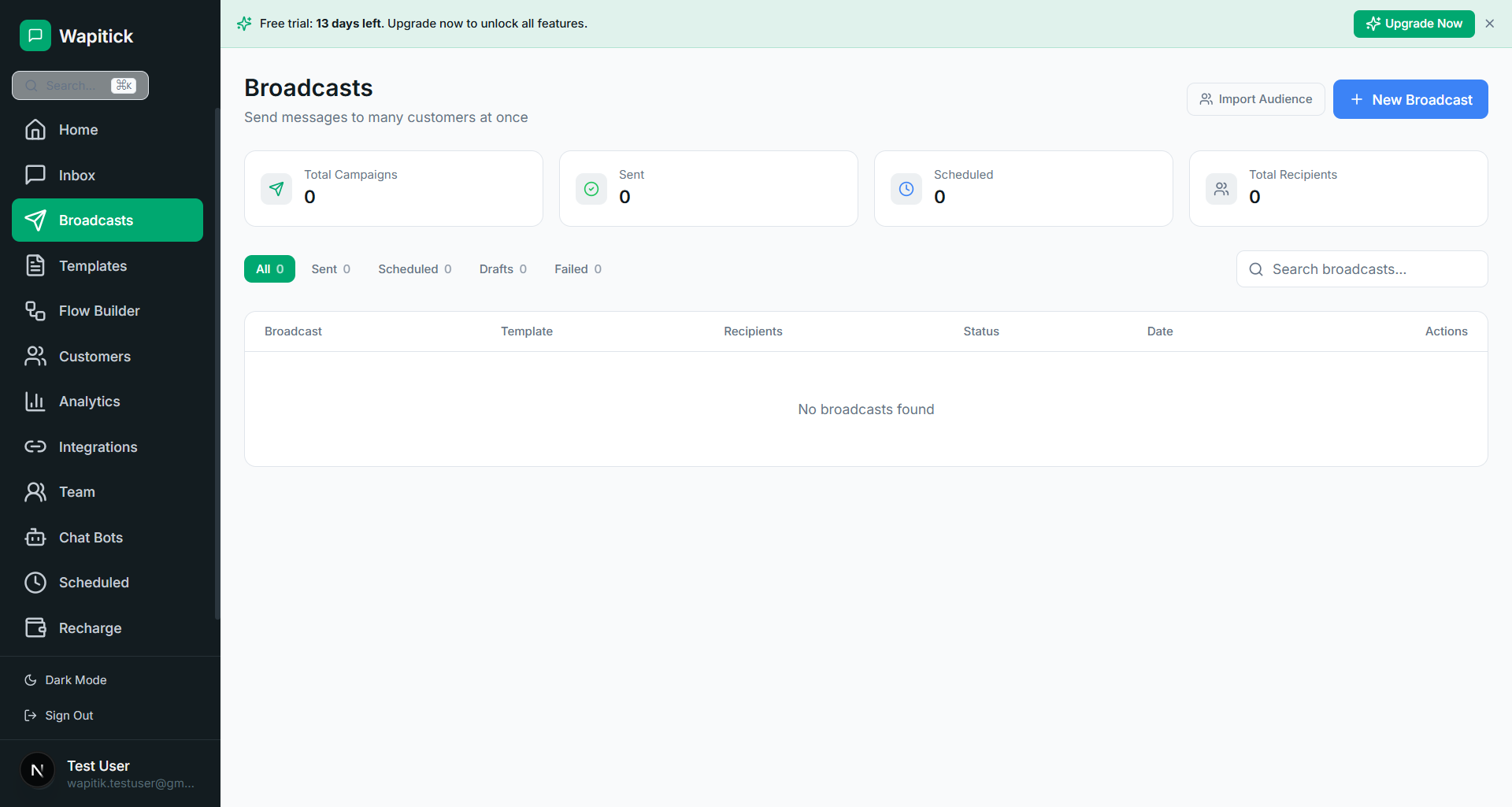
The phrase "WhatsApp broadcast" can be misleading because it sounds simple, almost like an email blast with a different send button. In reality, WhatsApp broadcast campaigns sit at the intersection of content, compliance, targeting, timing, and operational follow-up. The success of a campaign rarely depends on the send alone. It depends on whether the message reaches the right audience, fits the right customer moment, and feeds cleanly into the next workflow once people respond. That is why businesses evaluating WhatsApp broadcast software should think about campaign operations, not just distribution volume.
One of the biggest mistakes teams make is importing email habits directly into WhatsApp. The channel is more immediate, more personal, and much less forgiving of irrelevant communication. Frequency, context, and segmentation matter more because customers tend to treat WhatsApp as a high-attention surface. A broadcast that feels useful can perform extremely well. A broadcast that feels lazy or repetitive can damage trust quickly. That is why the most effective WhatsApp broadcast strategy starts with targeting discipline rather than copy length or send size.
Broadcast campaigns work best when the business understands the customer moment it is trying to influence. Are you reminding a customer to complete a payment, nudging a lead to finish onboarding, announcing a relevant offer, updating an order, or reactivating a previously engaged audience? Those are different jobs and should not be handled with the same logic. The more tightly a campaign aligns with customer state, the more likely it is to feel timely instead of intrusive. This is one of the main reasons campaign software needs segmentation, suppression, and scheduling controls that reflect operational reality.
Templates timing and response handling
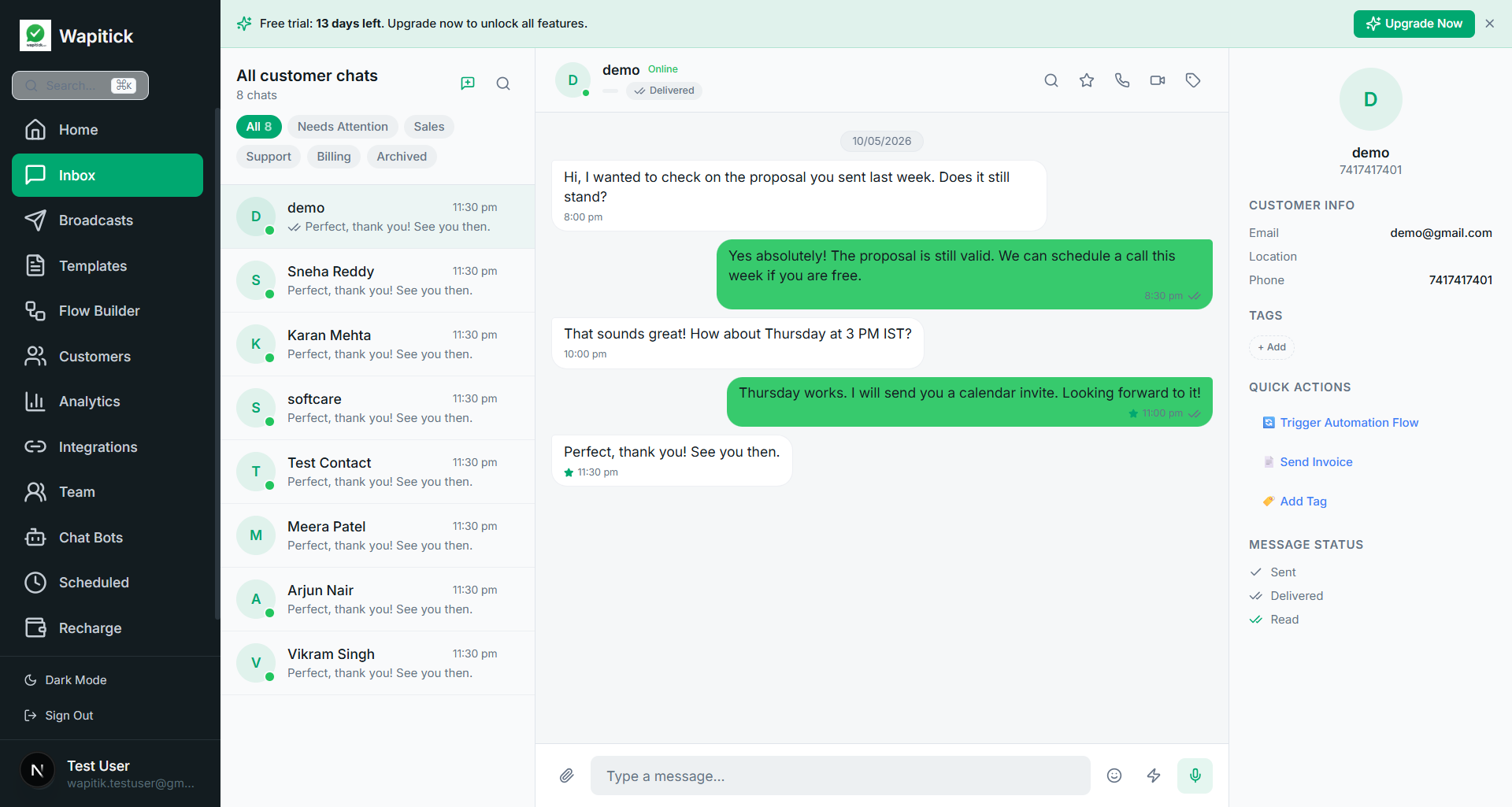
Template readiness plays a major role here. WhatsApp broadcast campaigns depend on approved content structure, but the existence of an approved template is not enough. The business also needs to know who should receive it, under what conditions it should be paused, what exclusions apply, and what should happen if the customer replies. Campaign operations become much stronger when templates are tied to audience logic and downstream routing instead of sitting in a disconnected approval library. This is where platforms can differentiate themselves by turning message assets into real operational building blocks.
Timing is another underappreciated variable. Many campaigns fail not because the message is wrong in absolute terms, but because it is sent at the wrong point in the workflow. A promotion arrives before the customer understands the value. A reminder arrives after the customer already completed the task elsewhere. A reactivation message lands too soon to feel relevant and too late to feel contextual. Good WhatsApp broadcast software should help teams schedule around business events, local timing, and workflow state so messages arrive when intent is highest rather than when the marketing calendar happens to be open.
Reply handling is often where the difference between campaign tooling and campaign software becomes obvious. If a broadcast generates interest, questions, or objections, what happens next? Are responses routed into a shared inbox? Are hot leads assigned quickly? Are existing customers separated from new prospects? Is the campaign suppressed for people who already converted? A broadcast system that measures sends but does not help the team manage responses is only solving half the job. Commercial value comes from the full loop, not the outbound action alone.
How to measure broadcast performance properly
This is also why analytics should be layered. Open-like metrics or delivery visibility are helpful, but they are not enough. Teams should track who was targeted, who responded, which responses turned into revenue or resolutions, which segments underperformed, and where suppression rules prevented waste. Once those measurements are available, campaign planning improves quickly. The business can see which moments deserve more investment and which campaign concepts only looked successful because they generated superficial activity instead of downstream value.
The strongest broadcast programs tend to combine three disciplines: message quality, audience quality, and operational follow-up. If any one of those is weak, the program becomes fragile. Great copy sent to the wrong audience still performs poorly. Strong targeting with poor handoff to sales or support wastes intent. Good operations without compliance discipline creates risk. A platform like Wapitick becomes more valuable when it makes all three layers visible in one place so the team can understand what actually drove performance.
Another important buyer question is whether the software supports recurring operational broadcasts as well as marketing broadcasts. Many businesses use WhatsApp not only for promotions but for reminders, payment prompts, booking nudges, stock updates, event alerts, and service continuity messages. Those use cases often carry higher operational value than pure promotion because they help customers complete actions they already intended to take. A campaign platform that supports these moments well can become central to both revenue operations and customer experience.
Suppression logic deserves special attention because it is a quiet driver of quality. Businesses often focus on who to include and ignore who to exclude. But some of the best campaign outcomes come from not sending unnecessary messages. If a customer already paid, booked, replied, or moved into a service queue, the system should reflect that quickly. Suppression protects customer trust and improves measurement because it keeps campaign exposure aligned with reality. Without it, performance data gets noisy and the customer experience becomes harder to defend.
What buyers mean when they search for WhatsApp broadcast software
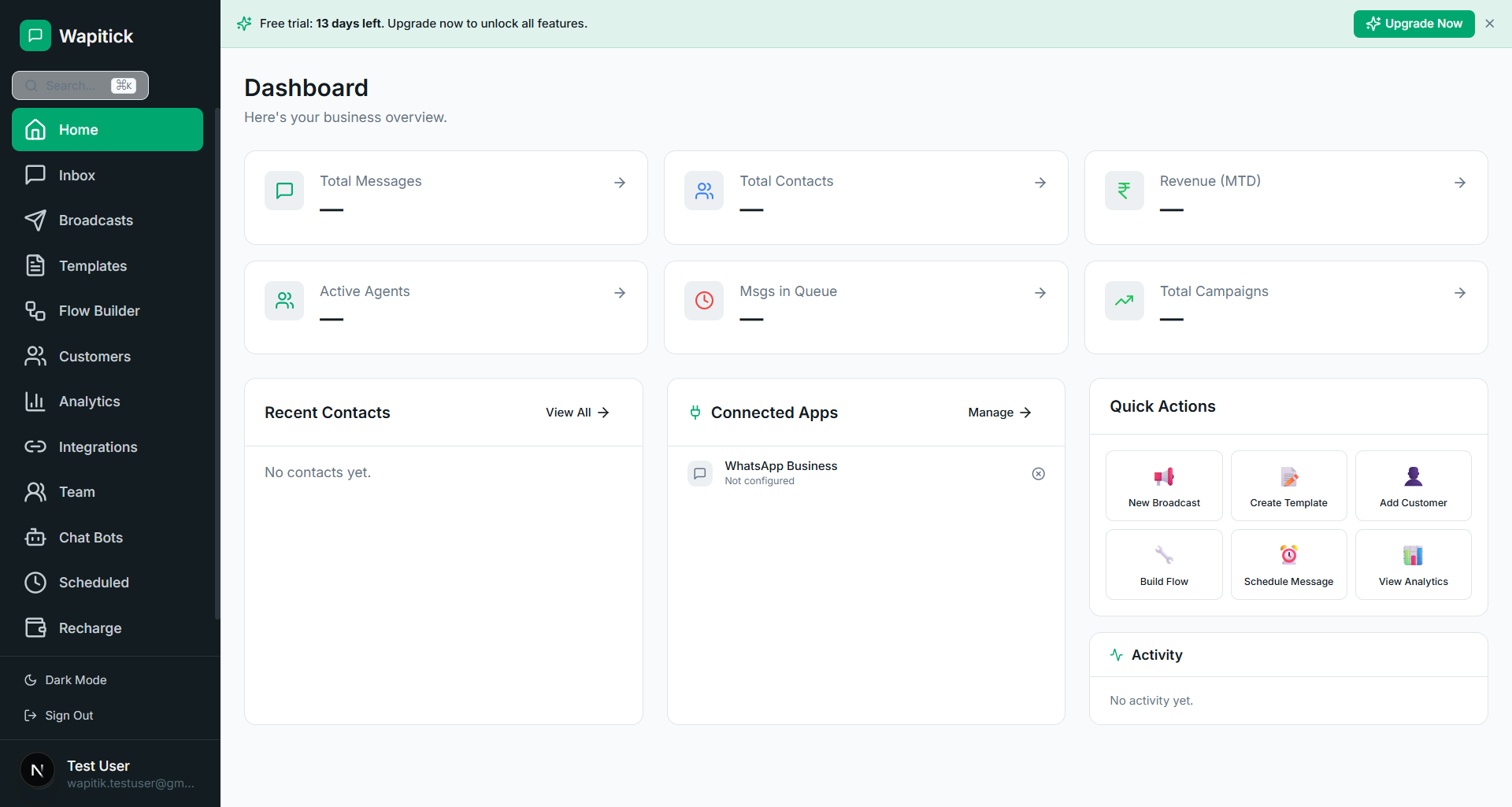
For search intent, "WhatsApp broadcast software" and "WhatsApp broadcast campaigns" are useful keywords because they often signal evaluation-stage users. These people are not only asking whether broadcasts exist. They are asking which platform helps them run campaigns responsibly and effectively. That means the best ranking content should address segmentation, template use, timing, compliance, response handling, analytics, and operational workflow. Thin content that only defines what a broadcast is will struggle to satisfy that intent.
There is also a growing strategic connection between broadcasts and first-party customer data. As teams become more careful about channel quality, they need better rules around who opted in, which campaigns they engaged with, what journey they are in, and whether they belong in a sales, support, or retention motion. WhatsApp campaign software becomes much more valuable when it can read and react to that context instead of treating every contact as an identical recipient. This is one of the strongest arguments for deeper CRM integration or at least CRM-ready data modeling.
In practical buying terms, businesses comparing broadcast tools should ask a few concrete questions. Can we segment reliably? Can we schedule and repeat campaigns without manual pain? Can replies be routed to the right team? Can we suppress people who have already completed the target action? Can we report on business outcomes rather than only message activity? Can we coordinate templates and broadcasts from the same workspace? The answers to those questions reveal much more than a feature checklist does.
Why broadcasts are a growth and operations capability
The best WhatsApp broadcast strategy ultimately respects the fact that messaging is not just another outbound surface. It is a conversation channel with high attention and high operational consequence. Teams that treat it carefully can generate meaningful revenue, stronger retention, and smoother customer follow-up. Teams that treat it casually often learn quickly that more sends do not automatically create more value. Ranking for broadcast-related keywords is worthwhile, but only if the content helps buyers understand these real tradeoffs.
For Wapitick, broadcasts are a strong bridge between growth and operations positioning. The product can talk credibly about campaign execution while also showing what happens after customers respond. That connected narrative is more compelling than a generic campaign story because it reflects how WhatsApp actually works inside a business. If the website consistently explains that operational loop, it has a better chance of attracting search visitors who are already looking for software rather than just educational content.