What matters most in this guide
- WhatsApp Flows work best when they remove friction from a real operational task instead of acting like interactive decoration.
- Structured intake, validation, and routing reduce manual clarification work for support, sales, and service teams.
- Endpoint-backed Flows become far more valuable when they trigger the next action in CRM, inbox, billing, or scheduling systems.
- Strong Flow programs are measured on downstream business outcomes, not only completion rate.
Why WhatsApp Flows matter now
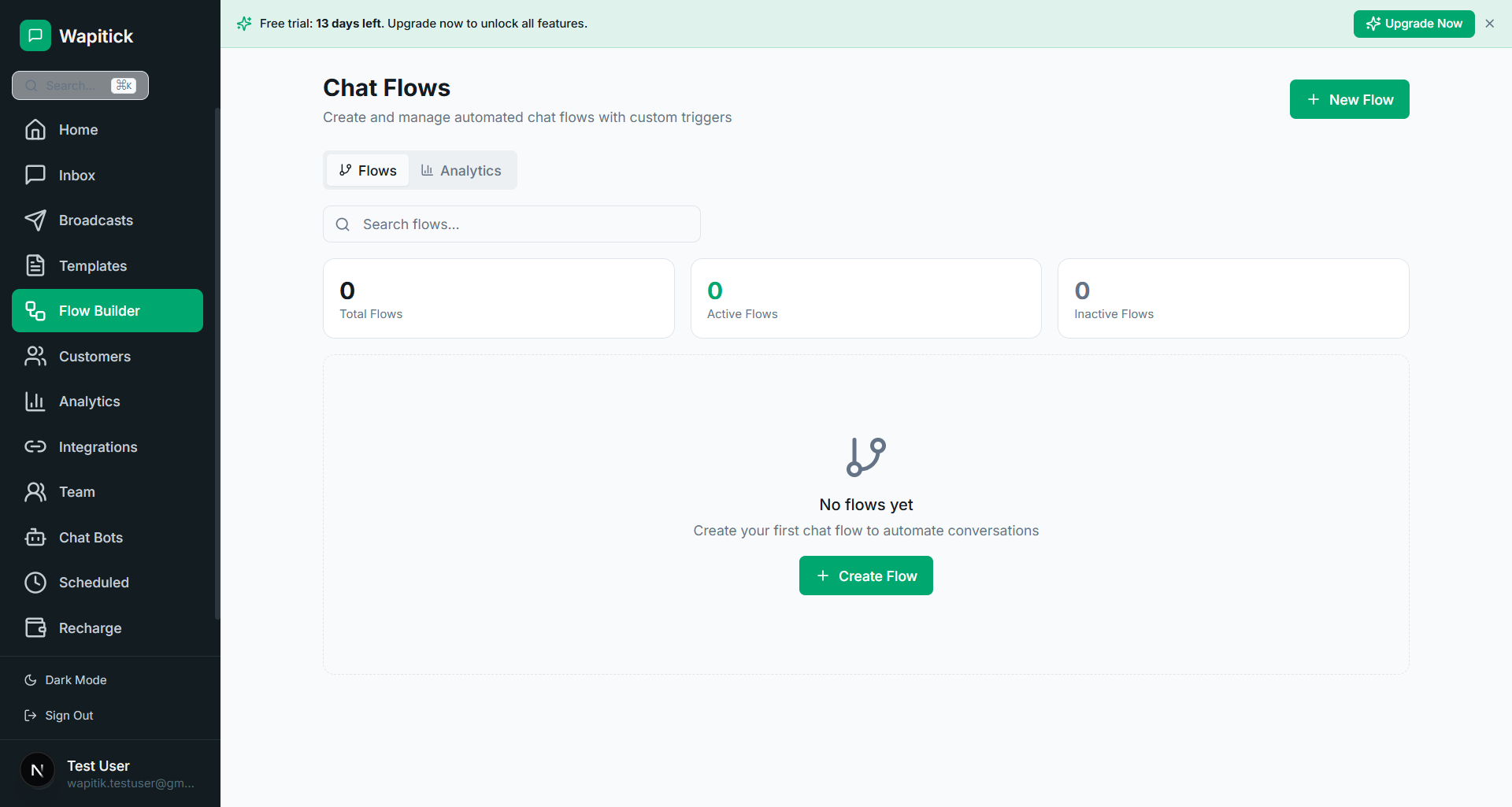
WhatsApp Flows have become one of the clearest examples of how business messaging is evolving from simple communication into executable workflow. In earlier messaging programs, the customer journey often broke the moment the business needed structured input. The conversation would start in chat, then push the customer to a form, then ask a human to reconcile the result manually. That handoff introduced abandonment, duplicated data entry, and confusion about who owned the next step. Flows matter because they keep the interaction in the same conversational surface while making the output structured enough for a business to act on confidently.
The most important strategic question is not whether your team can build a Flow. Most teams can. The question is whether the Flow removes enough friction from a real operational job to justify its place in your system. That means thinking beyond novelty. A useful Flow helps a customer complete something that would otherwise require back-and-forth or channel switching: appointment booking, support triage, lead qualification, document collection, product interest capture, service renewal, payment intent, or issue escalation. The success case is not that the interface looks interactive. The success case is that the customer completes the task faster and your team receives cleaner, more actionable data.
One of the reasons Flows are so relevant in 2026 is that customer expectations have shifted. People are comfortable handling more serious tasks inside messaging than they were a few years ago, but their patience is lower for avoidable friction. If a prospect is already in a WhatsApp conversation and the business sends them somewhere else to repeat the same information, the business is creating unnecessary work. Flows are a way to respect the customer's momentum. Instead of asking for another visit, another login, or another email, you finish the task in the place where the intent already exists. That can improve both conversion and customer sentiment at the same time.
Where Flows improve support, sales, and booking operations
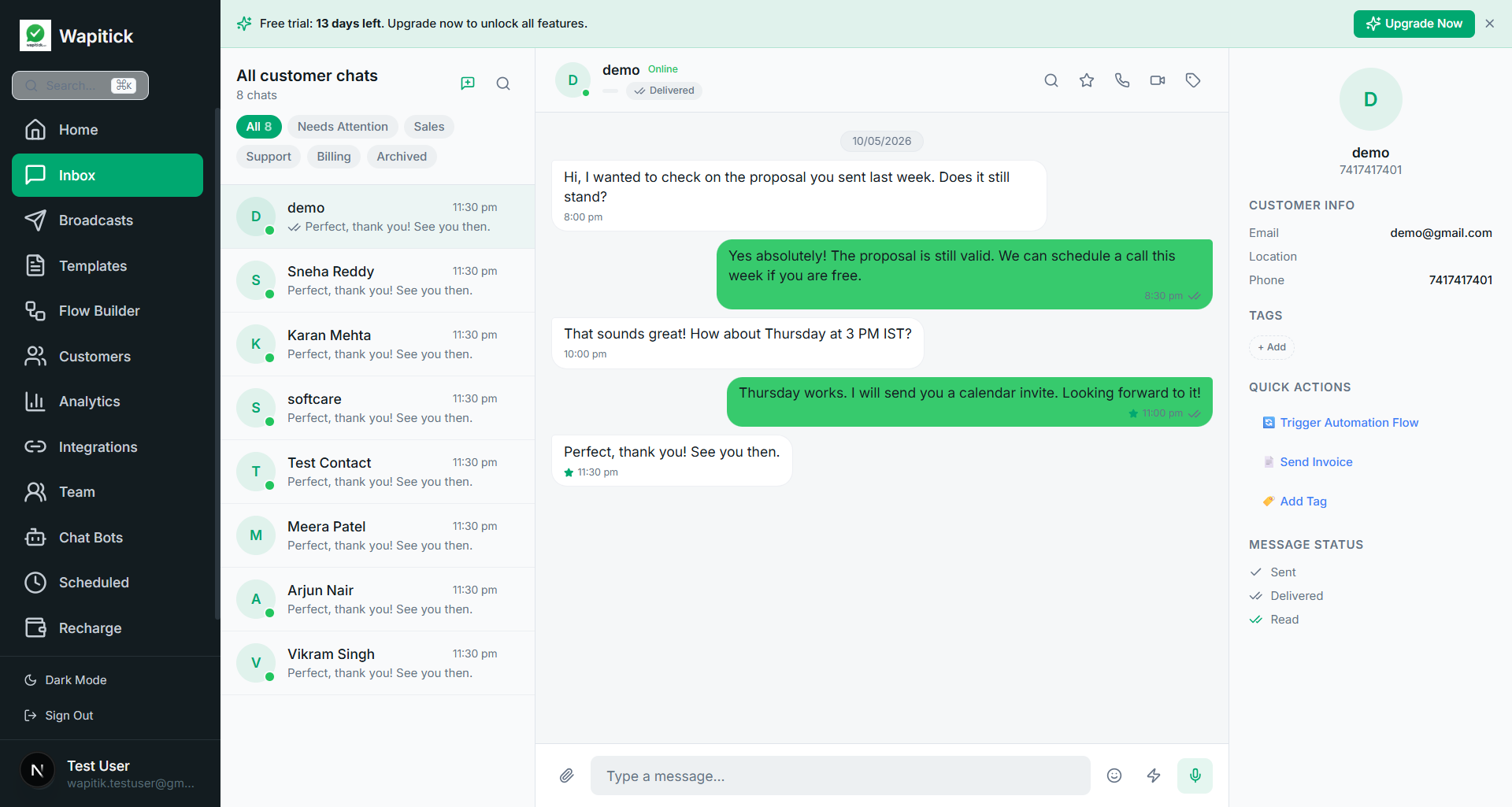
That does not mean every interaction should become a Flow. Free-form conversation still matters. A common mistake is turning simple exchanges into over-structured journeys. The right rule is to use a Flow when structure adds speed, confidence, or data quality. Use conversation when empathy, nuance, or trust-building matters more than standardization. Mature teams design both modes intentionally. They know when a Flow should gather required inputs before routing to a human, and when a human should stay in the loop from the beginning because the situation is ambiguous or high stakes. The point is not to replace conversation; it is to reserve human effort for the moments that actually need it.
For support teams, the strongest Flow use cases are often around intake quality. Customers rarely describe problems in a way that maps neatly to internal resolution workflows. A Flow can ask for order number, product category, urgency, preferred callback method, photo upload prompts, or issue type before the ticket is routed. That has two benefits. First, the customer feels guided rather than ignored. Second, the internal team gets structured context before a human begins the resolution. That can cut response time and reduce the number of clarification messages that otherwise consume agent attention without moving the case forward.
Sales teams benefit from Flows in a different way. Lead quality often deteriorates because the first handoff from marketing to sales is too loose. A chat thread that contains vague interest but no qualifying detail is hard to prioritize. A Flow can collect business size, use case, region, budget range, current tools, timeline, and preferred contact method. Instead of sending every lead to a generic queue, the business can segment and route based on actual intent. When done well, the Flow becomes an early qualification layer that respects the buyer's time and gives the sales team a more accurate picture of who should be followed up first.
Service businesses can use Flows to reduce operational latency in booking and rescheduling. Think of clinics, repair services, field teams, consultation businesses, or agencies that need a small but critical amount of information before confirming a slot. When that data collection happens in open text, the team often has to re-read the thread, copy details into a calendar, and ask follow-up questions. A Flow can collect location, preferred date window, issue type, customer preference, or service category in a predictable format. That structure makes scheduling faster and creates a cleaner bridge into downstream systems like calendars, CRMs, or case-management tools.
Design Flows as workflow inputs, not isolated screens
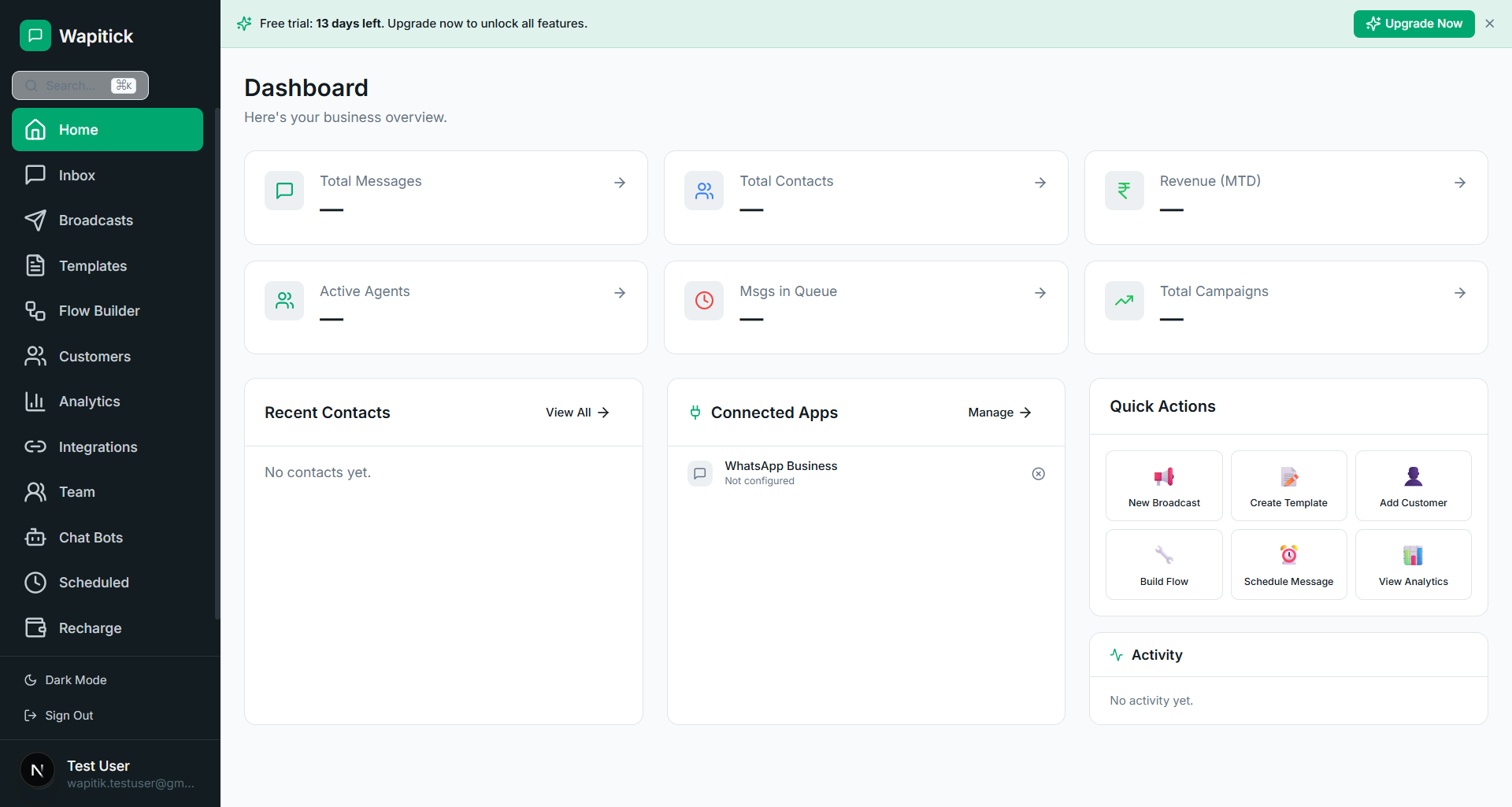
The internal data model is just as important as the front-end interaction. A Flow should never end as a static response stored somewhere obscure. The moment a customer submits, the system should create the next action. That might mean assigning a conversation, tagging a contact, triggering a campaign exclusion rule, opening a CRM record, generating a billing draft, updating an inventory request, or notifying a Slack channel. This is why operations teams should evaluate Flows as workflow inputs, not content assets. A pretty screen that produces no reliable handoff is just another dead end. A modest screen with an excellent internal action model creates real leverage.
Another operational advantage of Flows is validation before human time is spent. Support and sales teams lose hours each week because required information comes in incomplete, ambiguous, or inconsistent. A Flow can enforce field requirements, accepted values, step order, and useful defaults before a teammate ever sees the result. That does not eliminate all ambiguity, but it moves avoidable ambiguity earlier in the process where software can handle it. The effect compounds over time. Even a small reduction in clarification messages can free a team to handle more volume, improve response quality, and create a calmer operating rhythm.
There is also a governance angle that teams should not underestimate. WhatsApp is not an unrestricted outbound channel, and customer journeys must respect opt-in, template rules, and service-window realities. A managed Flow system helps because it creates a reviewable asset with named fields, validation, status, and publishing control. That is much safer than allowing business-critical journeys to exist as ad hoc message sequences written differently by different operators. Governance is not just about risk reduction. It also improves continuity. If one teammate leaves, the business still knows how a journey works and what data it is supposed to produce.
How to measure governance and quality
Measurement for Flows should go well beyond completion rate. Completion tells you whether people finished the interaction, but not whether the business benefited. Good teams also track drop-off step, routing accuracy, downstream resolution speed, conversion quality, average handling time after submission, and whether the data collected reduced manual follow-up. In some cases, the most valuable metric is simply the reduction in avoidable back-and-forth. If a Flow produces the same number of completed cases but cuts three clarification messages per case, that is still a major operational win. The point is to measure whether the Flow improved the business system, not only whether it was used.
A lot of poor Flow implementations fail because they start with the interface instead of the task. Teams ask, "What screens can we create?" before asking, "What operational outcome are we trying to improve?" The better sequence is to define the outcome first, map the minimum information required, identify the downstream action, and then design the Flow around those constraints. When teams do it in that order, they build shorter, clearer, more useful experiences. When they do it in reverse, they often end up with bloated journeys that look sophisticated but create little value. Brevity and clarity usually beat complexity in customer-facing workflow design.
Dynamic orchestration and the next stage of WhatsApp operations
The rise of endpoint-backed Flow planning is especially important for more advanced use cases. Static Flows are useful, but many businesses eventually need context-aware logic that reacts to available inventory, service slots, eligibility rules, existing customer state, or live pricing. The operational promise of endpoint-backed experiences is not that they are more technical. It is that they allow the workflow to become responsive to business reality. A support Flow can show issue options based on account type. A booking Flow can display real availability. A sales Flow can personalize next steps based on previously captured data. That responsiveness makes the journey feel more coherent to the customer and more trustworthy to the team.
At the same time, teams should resist the temptation to over-engineer. Endpoint-backed logic can create dependency chains that become fragile if no one owns them. Every dynamic decision should be traceable and observable. If the Flow depends on external systems, operators should be able to see when those systems fail and what fallback behavior is triggered. A platform like Wapitick becomes especially valuable here because it can keep the operator context close to the customer conversation instead of scattering evidence across separate tools. Visibility is what allows businesses to adopt richer workflows without losing control of support quality or response speed.
The operational future of WhatsApp Flows is less about novelty and more about orchestration. The winning teams will be the ones that treat Flows as reusable components in a broader system: templates start the journey, Flows collect or confirm structured data, inbox workflows handle exceptions, automations route the result, and analytics show whether the journey is improving revenue or reducing manual work. Once that system is in place, Flows stop being a feature showcase and become a durable layer in the business operating model. That is why they deserve serious design attention today rather than being treated as an optional experiment.