What matters most in this guide
- A strong WhatsApp shared inbox improves ownership, continuity, and visibility rather than only centralizing messages.
- Support and sales teams benefit most when assignment, notes, search, labels, and customer context are close to the live conversation.
- Shared inbox software becomes strategically valuable once leaders can measure response rhythm, queue aging, and handoff quality.
- The best buying criteria focus on workflow clarity and operational control, not only UI polish.
Why businesses outgrow individual WhatsApp handling
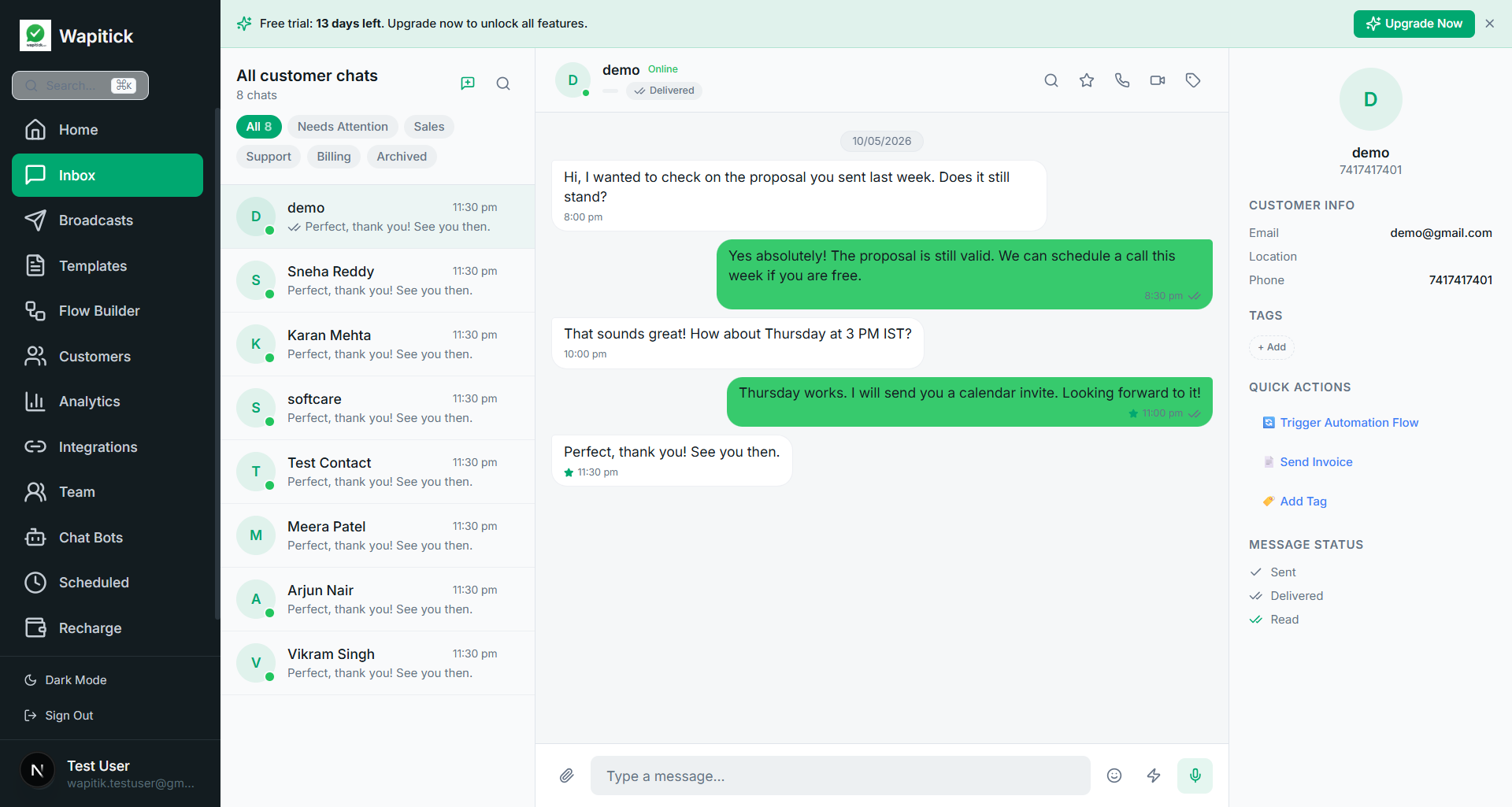
The phrase "WhatsApp shared inbox" is often used as if it describes a single feature, but for growing teams it is closer to an operating model. A company does not adopt a shared inbox because it wants another screen to look at. It adopts one because customer conversations have outgrown individual phones, fragmented ownership, and the informal memory of whoever last replied. Once multiple people need to answer, review, escalate, or report on WhatsApp conversations, the problem is no longer messaging alone. The problem is coordination, accountability, and continuity at scale.
That is why the strongest shared inbox evaluations start with workflow questions rather than UI questions. Who owns a new inbound message when several teammates are online? What happens if the assigned teammate is unavailable? How do notes, customer history, and escalation context move with the conversation? Can a manager see where replies are stalling before the customer notices? These are the practical reasons businesses search for WhatsApp shared inbox software in the first place. The interface matters, but it matters because it supports these jobs, not because the inbox grid itself is novel.
Teams usually feel the pain in stages. At first, one person manages the WhatsApp number directly. Then volume rises and a second person starts helping. Soon after, questions appear that the business cannot answer cleanly: who replied last, who promised a callback, which customers are waiting, which leads are hot, which support threads are unresolved, and what happens when someone is off shift. A shared inbox earns its place when it resolves those ambiguities without slowing down the front line. The best systems make ownership obvious and collaboration lightweight instead of forcing extra admin work onto already busy teams.
What a real WhatsApp shared inbox should do
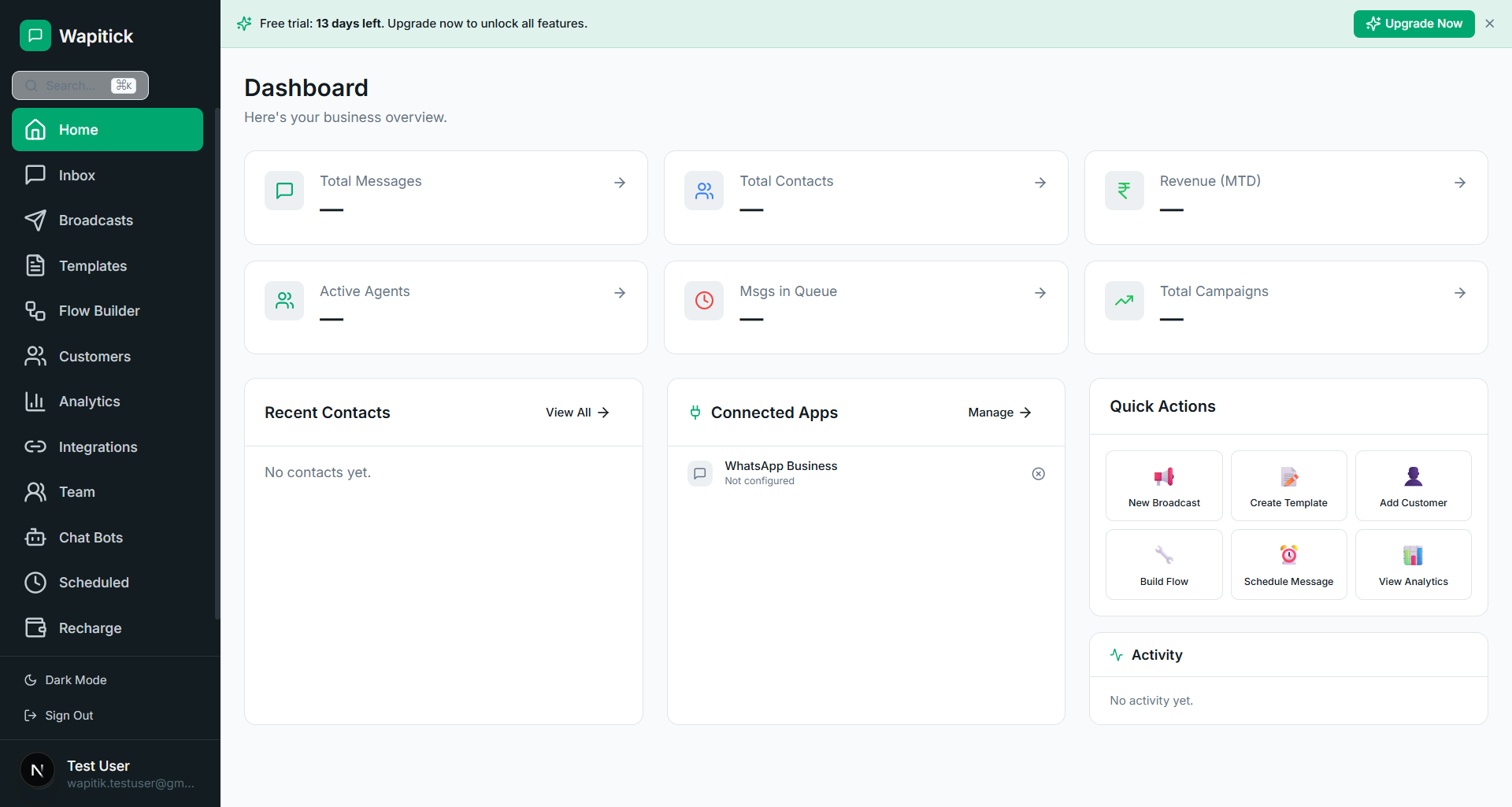
A real shared inbox should therefore do more than centralize messages. It should expose assignment, internal notes, labels, search, filters, customer context, and conversation state in a way that helps the next safe action become obvious. If one operator can answer a message faster but the rest of the team cannot understand what happened, the business has not actually improved. Centralization without context simply moves the bottleneck. Good inbox design turns conversational history into operational visibility.
Support teams feel this most clearly because their work depends on continuity. A customer asking for an order update, a refund, a service window, or a technical clarification rarely cares which teammate is replying. They care that the business knows what is happening. A shared inbox reduces the risk of duplicated effort, conflicting answers, or missed handoffs because the thread, notes, and customer record are visible to the team. That visibility is one of the main reasons WhatsApp shared inbox software can improve both response quality and customer confidence at the same time.
Sales and lead conversion teams benefit in a different but equally important way. Many WhatsApp sales motions break down because early-stage leads arrive quickly but follow-up is inconsistent. One rep responds immediately, another forgets, and a third has no idea which leads have already shared budget, use case, or urgency. A shared inbox with assignment rules, notes, and labels gives sales teams a more dependable handoff model. That does not replace CRM structure, but it improves the front-end discipline that determines whether the CRM data will be trustworthy in the first place.
Another important distinction is between inbox collaboration and inbox clutter. Some tools simply let many people see the same messages. That is not enough. A high-quality WhatsApp team inbox should also help the business reduce noise. That means clear segmentation between support, sales, campaigns, escalations, and administrative threads. It means filters that help leaders review workload without opening every conversation manually. It means saved replies and internal comments that speed up repeatable work without flattening customer tone. Without those controls, a shared inbox can become a shared confusion layer rather than a coordination system.
Search permissions and metrics that actually matter
Search is another underrated capability. Businesses often discover too late that a conversation archive is only useful if it is operationally retrievable. Can the team search by phone number, name, label, issue type, internal note, or previous interaction detail? Can a manager find all unresolved escalations tied to a campaign or all customers waiting on a specific policy exception? Search is not a cosmetic enhancement. It is part of how a company turns raw conversation volume into usable institutional memory.
Permissions also matter more than most buyers expect. Not every teammate should have the same access to templates, broadcasts, exports, sensitive customer data, or routing logic. A mature WhatsApp shared inbox needs role clarity, especially as teams grow beyond a few operators. Permission design is not only about security. It also improves focus. When people see the controls relevant to their job and not everything else, execution becomes faster and safer. That is one reason enterprise buyers often care as much about governance as they do about conversation speed.
Measurement is where inbox decisions become strategic. The right software should help teams track first response time, resolution rhythm, reassignment frequency, queue aging, missed follow-up risk, campaign reply handling, and workload visibility across people or shifts. These metrics matter because they expose operational bottlenecks that a basic messaging interface cannot show. Once leadership can see the shape of the work, the inbox stops being a communication tool alone and becomes a source of management insight.
How shared inbox software fits into a broader WhatsApp stack
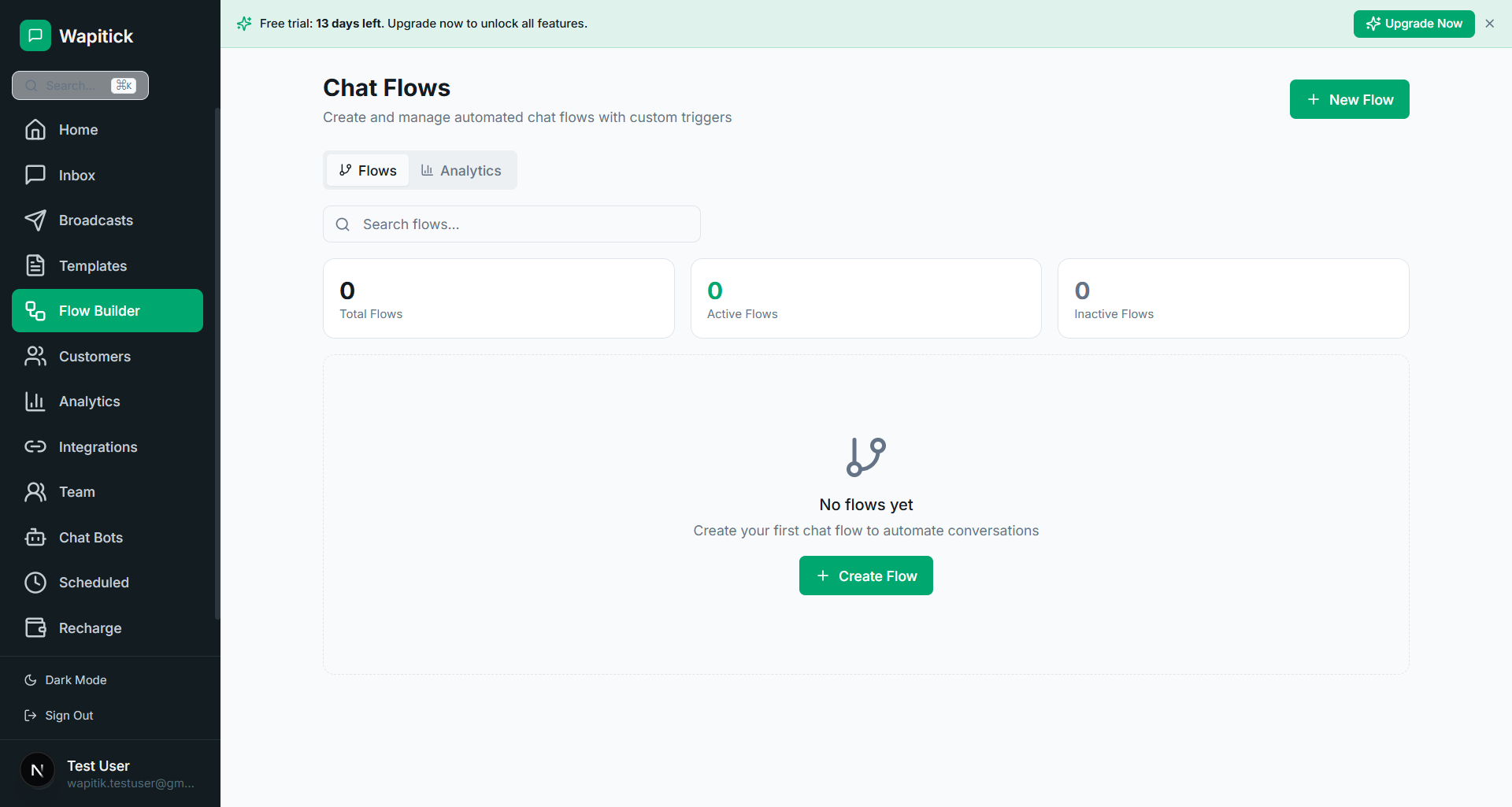
This is also where shared inbox software connects directly to other WhatsApp capabilities. The conversation does not begin and end in the inbox. A template may trigger the thread, a Flow may gather structured input, an automation may route the outcome, and CRM or billing systems may need the result. Businesses get more value when the inbox is part of a connected operational stack rather than a standalone response panel. Wapitick is positioned well when it presents the shared inbox as the visible control center where those connected workflows remain understandable to the team.
When companies compare WhatsApp shared inbox tools, they should resist the temptation to choose purely on surface polish. A clean UI is valuable, but the better long-term question is whether the product helps the business preserve context while volume grows. Can multiple people collaborate without stepping on each other? Can a lead be handed from campaigns to sales without losing intent? Can a support case cross shifts without forcing the customer to repeat details? Can management understand where work is slowing down? Those are the outcomes that actually justify migration or software spend.
The keyword opportunity around "WhatsApp shared inbox" is strong because buyers using that language are usually evaluating real software, not casually browsing. But ranking well for that term requires content that matches buyer intent. That means the article should explain not only what the concept is, but how teams compare tools, which features matter, how shared inbox software supports sales and support operations, and why conversation ownership is harder than it looks. Search engines increasingly reward that kind of people-first usefulness because it aligns with what serious buyers are actually trying to learn before they request a demo.
What high-intent buyers are really comparing
In the end, the best shared inbox is the one that makes teamwork on WhatsApp calmer, clearer, and more measurable. If your business is still depending on individual devices or loose handoffs, the pain will compound with volume. If your next tool simply centralizes messages without adding ownership, governance, search, and visibility, the pain will return in a different shape. The companies that get the most value from WhatsApp shared inbox software are the ones that treat it as infrastructure for customer operations, not just as a prettier place to reply.
That is the reason this topic matters so much for Wapitick's public positioning. Shared inbox software is not only a feature bucket. It is one of the clearest commercial entry points for businesses trying to professionalize their WhatsApp motion. If the site explains that operational value clearly and connects it to templates, Flows, broadcasts, automations, and CRM readiness, it can attract both high-intent search traffic and better-qualified product conversations.